

We often spend our days listening to everything around us. Emails. Notifications. Meetings. Children. Family. Deadlines. To-do lists.
But somewhere in the middle of all that noise, there is another voice we often overlook — our body.
It may not speak in words, but it is constantly communicating with us.
A stiff neck after a long day at the laptop.
Tight hips after hours of sitting.
A tired back after carrying groceries.
Shallow breathing when we feel stressed.
Low energy when we haven’t rested enough.
These aren’t necessarily things we need to “fix” immediately. Sometimes, they’re simply messages.
The question is: are we listening? Your body often whispers before it shouts.
One of the easiest ways to understand our bodies is to think of discomfort as a conversation.
Your body might start with a gentle whisper:
“I’ve been sitting for too long.”
If we keep ignoring it, the whisper might become:
“My shoulders are really tight today.”
And eventually, it may become something much harder to ignore.
Of course, not every ache or pain is caused by lifestyle, and persistent or unusual pain should always be discussed with a qualified healthcare professional.
But in everyday life, many of us can benefit from simply becoming more aware of what our bodies are telling us.
You don’t always need a complicated routine.
Sometimes, you need to pause.
Notice how you feel, not just how you look
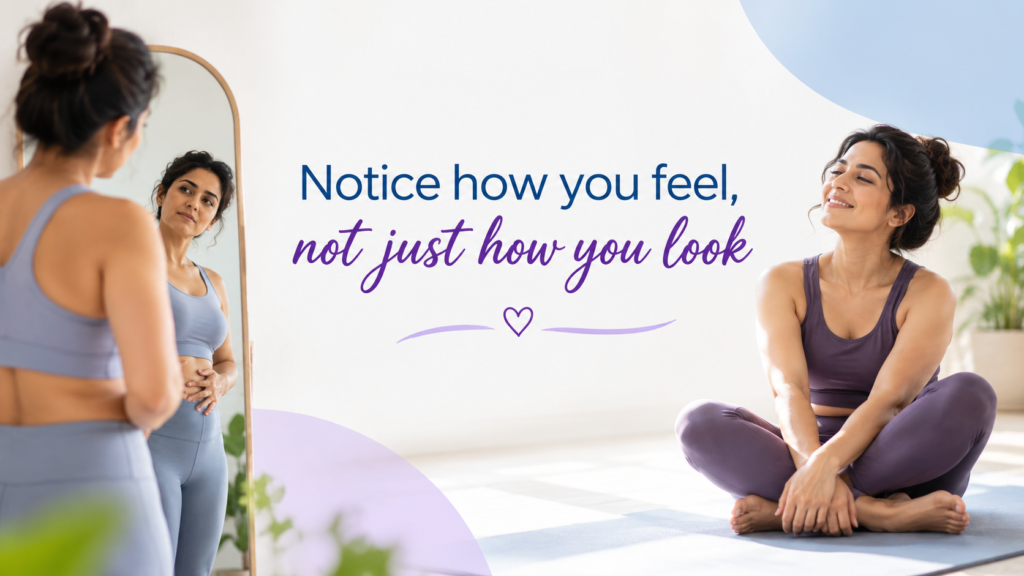
We’re surrounded by messages about how our bodies should look.
Flat stomachs. Defined muscles. Perfect posture. Smaller waistlines. More flexibility.
But your body is so much more than its appearance.
A strong body is one that can help you carry your bags, climb stairs, get up from the floor, travel comfortably, play with your children or sit through a workday without feeling completely exhausted.
Mobility isn’t just about touching your toes.
Strength isn’t just about lifting heavy weights.
Balance isn’t just about standing on one leg.
Fitness is ultimately about being able to live your life with greater ease and confidence.
So instead of asking, “How does my body look today?”, perhaps we can sometimes ask:
“How does my body feel today?”
That’s a very different conversation.
What is your body telling you?
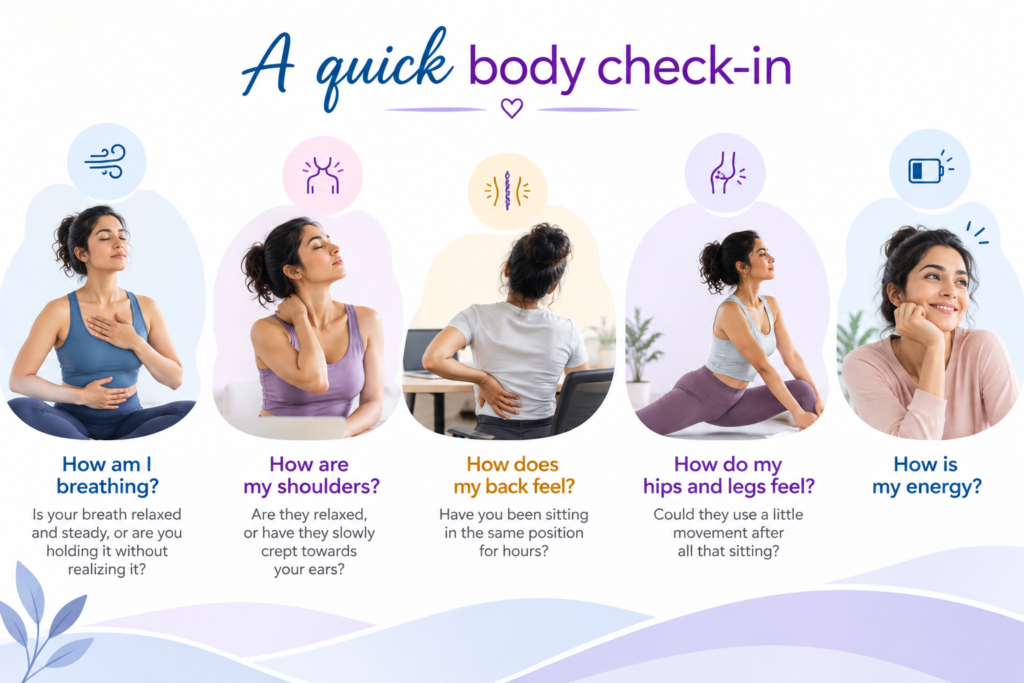
Try checking in with yourself during the day.
Noticing doesn’t have to become another task on your already long list.
Take a few seconds and ask:
How am I breathing?
Is your breath relaxed and steady, or are you holding it without realizing it?
How are my shoulders?
Are they relaxed, or have they slowly crept towards your ears?
How does my back feel?
Have you been sitting in the same position for hours?
How do my hips and legs feel?
Could they use a little movement after all that sitting?
How is my energy?
Are you genuinely tired, or simply mentally overwhelmed?
There are no right or wrong answers.
The goal isn’t to judge yourself.
It’s simply to notice.
Movement can be a conversation too
We often think of exercise as something we have to “get done.”
Thirty minutes. Five exercises. Ten repetitions. Calories burned.
But movement can also be a way of checking in with your body.
A few gentle stretches might tell you that your hips feel tight.
A Pilates session might make you notice how much your core supports your everyday movements.
A strength workout might remind you that your body is capable of more than you realised.
A few minutes of breathing might help you notice how much tension you’ve been carrying.
And sometimes, movement might tell you something else:
Today, I need rest.
That’s important too.
Listening to your body doesn’t always mean doing more.
Sometimes it means slowing down.
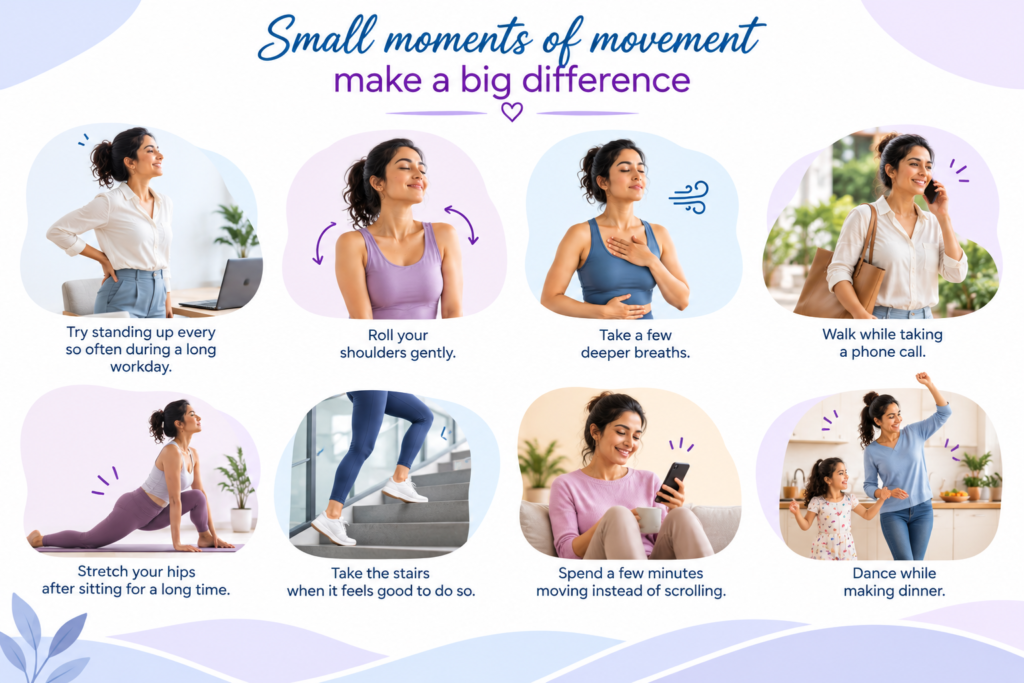
Small moments of movement matter
You don’t need to completely change your routine to start listening to your body.
Try standing up every so often during a long workday.
Roll your shoulders gently.
Take a few deeper breaths.
Walk while taking a phone call.
Stretch your hips after sitting for a long time.
Take the stairs when it feels good to do so.
Spend a few minutes moving instead of scrolling.
Play on the floor with your children.
Dance while making dinner.
Take a walk without turning it into a workout.
These small moments may seem insignificant, but they add up.
More importantly, they help us reconnect with something we can easily lose touch with when life gets busy: the feeling of being in our own bodies.
So, are you listening?
Your body doesn’t need you to be perfect.
It doesn’t need an intense workout every day.
It doesn’t need to look a certain way.
It needs your attention.
It needs movement, rest, nourishment, strength, mobility and recovery — in a balance that works for you.
Ask yourself:
“What is my body trying to tell me today?”
You might be surprised by how much you’ve been hearing all along.
Your body is talking.
Maybe it’s time to listen.